


Signal
Marie Voignier
22.05.2026 - 25.07.2026, vernissage 21.05.2026
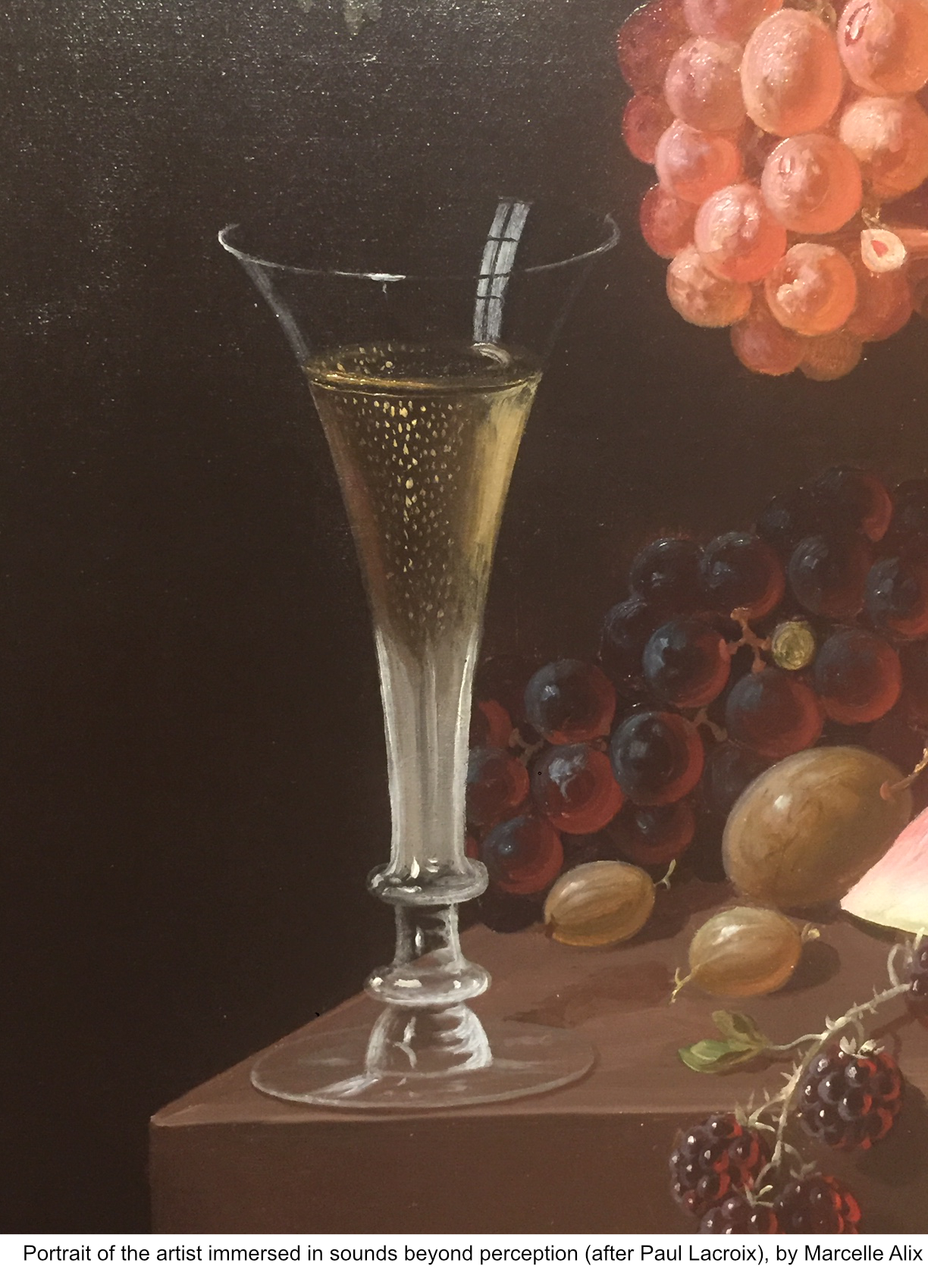
"Une dernière question: saviez-vous que les gastéropodes y voient mal ? Pire encore, il paraît qu'ils ne regardent rien. Ils se repèrent autrement. Malgré leurs deux yeux au bout de leurs cornes bien tendues, ils n'y voient pratiquement rien ; ils distinguent tout au plus l'intensité de la lumière et fonctionnent 'à l'odeur' "
Daniel Arasse, On n'y voit rien, éd Gallimard, Paris, 2003
IA : J’ai toujours pensé au travail de Marie Voignier comme l’exploration d’un endroit "où on ne voit pas", c’est-à-dire une façon de montrer les limites d’une vision nécessairement située et partielle. Sa caméra s’intéresse à ces lieux où il n’y aurait rien à voir, c’est-à-dire rien à filmer : un procès en huis-clos, la Corée du Nord, les boutiques de grossistes en vêtements d’une grande ville chinoise.
Le compagnonnage qui s’est établi avec Michel Ballot, crypto-zoologue à la recherche d’un très grand animal dont l’habitat se situerait autour des grands fleuves du sud-est camerounais mais qu’il n’a jamais vu (L’hypothèse du Mokele-Mbembe, 2011), est l’une des multiples façons que Marie a trouvées pour décaler le regard. Si Michel lui a fait découvrir cette région reculée du Cameroun en tentant de faire sens d’un environnement dont il n’a pas les codes, l'artiste a voulu parcourir la forêt sans lui, et suivre les habitants du village qui y posent des pièges, comme Noël Pial, son guide. Dans Tinselwood (2017), que nous avons montré à la galerie, la caméra essaie de faire le point sur le "vert monument" de la forêt camerounaise, quasiment en vain. Le regard des spectateur·ices se perd, nul ne sait distinguer les sons perçus, ni les traces laissées par les animaux. Marie évoque l’impact de la présence coloniale comme co-construction de notre regard sur le paysage, que les spectateur·ices occidentaux décident par facilité de reléguer dans la catégorie de 'nature'. Celle qui nous submerge et nous déboussole.
L’exposition "Signal" est l’occasion de présenter de nouvelles œuvres—deux films et une série de photographies—qui nous plongent encore dans cette impression persistante "qu’on n’y voit rien". Et puis, petit à petit, Marie nous donne des éléments de compréhension et d’acceptation du réel : il n’y a jamais rien, sinon ce qui reste encore à apprendre à voir ou à entendre.
Dans le village où Marie est retournée, les femmes s’organisent collectivement pour défricher et cultiver un champ et soutenir une voisine dans le besoin. Anamocot (2025) est l’occasion pour l’artiste de filmer celles qui étaient encore invisibles dans ses œuvres précédentes : il a fallu trois films pour voir les femmes du village et avoir accès à leur façon de s’organiser, en marge des cérémonies spirituelles menées par les hommes. Sans démonstration théorique, Marie fait œuvre féministe : presqu’aussi invisible que le Mokele est le travail des femmes.
CB : J’aimerais poursuivre en parlant du rapport à la nature chez Marie Voignier et de son goût pour la trace, qu’elle capte plus particulièrement par la photographie en noir et blanc. Il s’agit moins d’une marche que d’une attention au vivant suspendue, presque méthodique, où le paysage apparaît comme une zone d’apparitions discrètes. Dans les Vosges, où elle se rend fréquemment, elle semble attendre qu’un fragment du réel se détache, se charge, et finisse par adresser un signal — nourrie de peinture, le paysage ne cesse de la lui renvoyer comme une mémoire active du regard.
Dans cette économie du regard, on pourrait dire que Marie travaille à partir d’un régime des traces : non pas ce qui s’impose comme image, mais ce qui insiste sans se donner immédiatement à voir. Si ses films cherchent à faire coexister, par le montage, des éléments incompatibles et bien souvent les contradictions des êtres humains, ses photographies privilégient au contraire l’amorce d’un récit infra-mince, toujours ouvert, toujours inachevé, où la signification demeure en suspens.
Les sols, pour elle, sont saturés de signes — qu’on les comprenne ou non. Ils relèvent d’une forme d’écriture du monde que nous percevons mal, mais qui agit néanmoins sur nous. Marie y reconnaît des formes émouvantes, comme si la terre conservait une mémoire pré-linguistique. Certaines traces la conduisent jusqu’aux débuts de l’alphabet, à ces pierres gravées photographiées au Louvre, où la naissance de l’écriture semble encore indissociable de la matière. D’autres images, issues de prélèvements de laboratoire, déplacent encore ce seuil : elles obligent à penser le vivant dans ses fréquences les plus basses, là où la perception humaine devient insuffisante.
Ce que Marie nomme implicitement "signal" relève d’une écologie de la communication non humaine : une circulation continue d’informations entre vivants, que nos régimes perceptifs ordinaires ne savent pas capter. Les dispositifs scientifiques qu’elle a filmés en Slovénie rendent cette hypothèse active : ils transforment le sol en surface d’écoute, et les cloches de prélèvement en instruments capables de déterminer si un insecte émet un signal, de quel sexe il est, ou s’il est blessé. Le vivant y apparaît comme un tissu d’émissions et de réponses, distribué à une échelle infra-perceptible.
La photographie fixe et matérialise cette tension : elle est à la fois surface muette et tentative d’enquête sur une communication intense au ras du sol, sous nos pieds, autour de nous. Elle engage ainsi une forme de phénoménologie du presque rien, où voir consiste moins à identifier qu’à reconnaître la densité de ce qui échappe encore à l’interprétation. C’est une manière de mesurer non seulement ce qui est là, dans ces graminées si légères, ce chemin si dessiné, ce sol meuble enfoncé par un pied ou une patte. Mais aussi le silence du regard humain face à un monde saturé d’événements, de signes et de circulations souterraines, qui continuent d’agir sans que nous sachions les entendre, comme on entend les oiseaux, non par traduction immédiate, mais par attention prolongée, par une disponibilité patiente. Cette disponibilité traverse l’ensemble du travail de Marie et en fait la singularité : une œuvre à la fois humble et d’une force non brutale, qui laisse le réel se renverser.
Née en 1974, Marie Voignier vit à Paris. Son travail vidéo a été notamment été présenté au Laxart, Los Angeles (2019), au Beirut Art Center (2018) et à Argos, Bruxelles (2018). Elle a été invitée à participer à la biennale de Singapour (2019), la Triennale, Palais de Tokyo, Paris (2012), les Ateliers de Rennes, Biennale d’art contemporain (2012), la Biennale de Berlin (2010), et à l'exposition internationale de la 57e Biennale de Venise (2017). Ses films sont régulièrement projetés dans les festivals parmi lesquels le FID Marseille (2022, 2017, 2014, 2011, 2010), la Viennale, Vienna International Film Festival (2017), à la 67e Berlinale, Berlin (2017) et inscrits dans les programmations d’institutions renommées telles que le Centre Pompidou, Paris (2020, 2012, 2008, 2007), le Nouveau Musée National, Monaco (2016) et l’ICA, Londres (2015). Deux d’entre eux, Hinterland (2009) et Tourisme International (2014) ont été primés au FID Marseille et Anamocot (2025) a reçu une mention spéciale du Festival Vision du réel. Marie Voignier a publié deux ouvrages : La Piste rouge (2017) et Original Copy (2022), tous deux liés à ses recherches et aux entretiens menés en amont de la réalisation des films Tinselwood (2017) et Na China (2019) respectivement.
Son travail a fait l'objet d'une rétrospective au cinéma du Jeu de Paume, du 7 au 19 avril 2026.
"One last question: did you know that gastropods have poor eyesight? Even worse, apparently they don’t really look at anything. They navigate in other ways. Despite their two eyes at the tips of their fully extended tentacles, they can barely see at all; at most, they can distinguish the intensity of light and operate mainly 'by smell' ''.
Daniel Arasse, On n'y voit rien, Gallimard, Paris, 2003
IA: I have always thought of Marie Voignier’s work as an exploration of a place "where we can’t see," that is, a way of showing the limits of a necessarily situated and partial vision. Her camera is drawn to those places where there would be nothing to see—i.e. nothing to film: a closed-door trial, North Korea, the wholesale clothing shops of a large Chinese city.
The relationship that developed with Michel Ballot, a cryptozoologist searching for a very large animal whose habitat would lie around the great rivers of southeastern Cameroon but whom he has never seen (The Hypothesis of Mokele-Mbembe, 2011), is one of the many ways the artist has found to shift the gaze. If Michel introduced her to this remote region of Cameroon while attempting to make sense of an environment whose codes he did not possess, she wanted to travel through the forest without him, and to follow the villagers who set traps there, such as Noël Pial, her guide. In Tinselwood (2017), which we showed at the gallery, the camera tries to focus on the “green monument” of the Cameroonian forest, almost in vain. The spectators’ gaze becomes lost; we can't distinguish the sounds that are heard, nor the traces left by animals. Marie evokes the impact of the colonial presence as a co-construction of our way of looking at the landscape—one that Western spectators, out of convenience, choose to relegate to the category of 'nature'. The kind of nature that overwhelms and disorients us.
The exhibition "Signal" provides an opportunity to present new works—two films and a series of photographs—that plunge us once again into this persistent impression that "there is nothing to see." And then, little by little, Marie offers us elements of understanding and acceptance of reality: there is never nothing, except what we still have to learn how to see or hear. In the village to which Marie has returned, women collectively organize to clear and cultivate a field, and to support a neighbor in need. Anamocot (2025) gives the artist an opportunity to film those who remained invisible in her previous works: it took three films to see the village women and gain access to their way of organizing, on the margins of the spiritual ceremonies led by men. Without theoretical demonstration, Marie produces feminist work: almost as invisible as the Mokele is the labor of women.
CB: I would like to continue by writing about Marie Voignier’s relationship to nature and her taste for traces, which she captures more particularly through black-and-white photography. This is less a walk than a suspended, almost methodical attentiveness to the living, in which the landscape appears as a zone of discreet appearances. In the Vosges mountains, where she often goes, she seems to wait for a fragment of reality to detach itself, to become charged, and finally to send out a signal—nourished by painting, the landscape never ceases to return it to her as an active memory of the gaze.
In this economy of looking, one could say that Marie works from a regime of traces: not what imposes itself as image, but what insists without immediately revealing itself. If her films seek, through editing, to make incompatible elements coexist, and very often the contradictions of human beings, her photographs instead privilege the beginning of an ultra-thin narrative, always open, always unfinished, where meaning remains suspended.
For her, the ground is saturated with signs—whether we understand them or not. They belong to a form of writing of the world that we perceive poorly, but which nonetheless acts upon us. Marie recognizes moving forms in them, as if the earth preserved a pre-linguistic memory. Certain traces lead her back to the beginnings of the alphabet, to those engraved stones photographed at the Louvre, where the birth of writing still seems inseparable from matter. Other images, drawn from laboratory samples, push this threshold even further: they compel us to think of the living in its lowest frequencies, where human perception becomes insufficient.
What Marie implicitly calls 'signal' belongs to an ecology of non-human communication: a continuous circulation of information between living beings, which our ordinary perceptual regimes are unable to capture. The scientific devices she filmed in Slovenia make this hypothesis active: they transform the ground into a listening surface, and sampling bells into instruments capable of determining whether an insect emits a signal, whether it is male or female, or whether it is injured. The living appears there as a fabric of emissions and responses, distributed on an infra-perceptible scale. Photography fixes and materializes this tension: it is both a mute surface and an attempt at investigation into an intense communication close to the ground, beneath our feet, around us. It thus engages a kind of phenomenology of almost nothing, where seeing consists less in identifying than in recognizing the density of what still escapes interpretation. It is a way of measuring not only what is there—in these light grasses, this carefully outlined path, this soft soil pressed down by a foot or a paw. But also the silence of the human gaze faced with a world saturated with events, signs, and underground circulations that continue to act without our knowing how to hear them—much like we hear birds, not through immediate translation, but through prolonged attention, through patient availability. This availability runs through Marie’s entire body of work and gives it its singularity: an oeuvre at once humble and endowed with a non-brutal force, one that lets reality overturn itself.
Born in 1974, Marie Voignier lives in Paris. Her video work has been presented in particular at Laxart, Los Angeles (2019), the Beirut Art Center (2018), and Argos, Brussels (2018). She took part in the Singapore Biennial (2019), La Triennale, Palais de Tokyo, Paris (2012), les Ateliers de Rennes, Biennale d’art contemporain (2012) and the 6th Berlin Biennale for Contemporary Art (2010) and in the International Exhibition and Special Projects of the 57th Venice Biennale (2017). Her films are regularly shown in festivals among them the FID Marseille (2022, 2017, 2014, 2011, 2010), the Viennale, Vienna International Film Festival (2017), the 67th Berlinale, Berlin (2017) and part of renowned institutions program such as the Centre Pompidou, Paris (2020, 2012, 2008, 2007), the Nouveau Musée National, Monaco (2016) and the ICA, London (2015). Two of them, Hinterland (2009) and International Tourism (2014) received awards at FID Marseille and Anamocot (2025) received a special mention at the Vision du réel Festival.
Jeu de Paume in Paris has just organized a retrospective of her films in its cinema (7-19.04.26).